
Borosilicate vs soft glass: what your pipe is made of
Glass care4 min readBy Utopia Smoke Shop
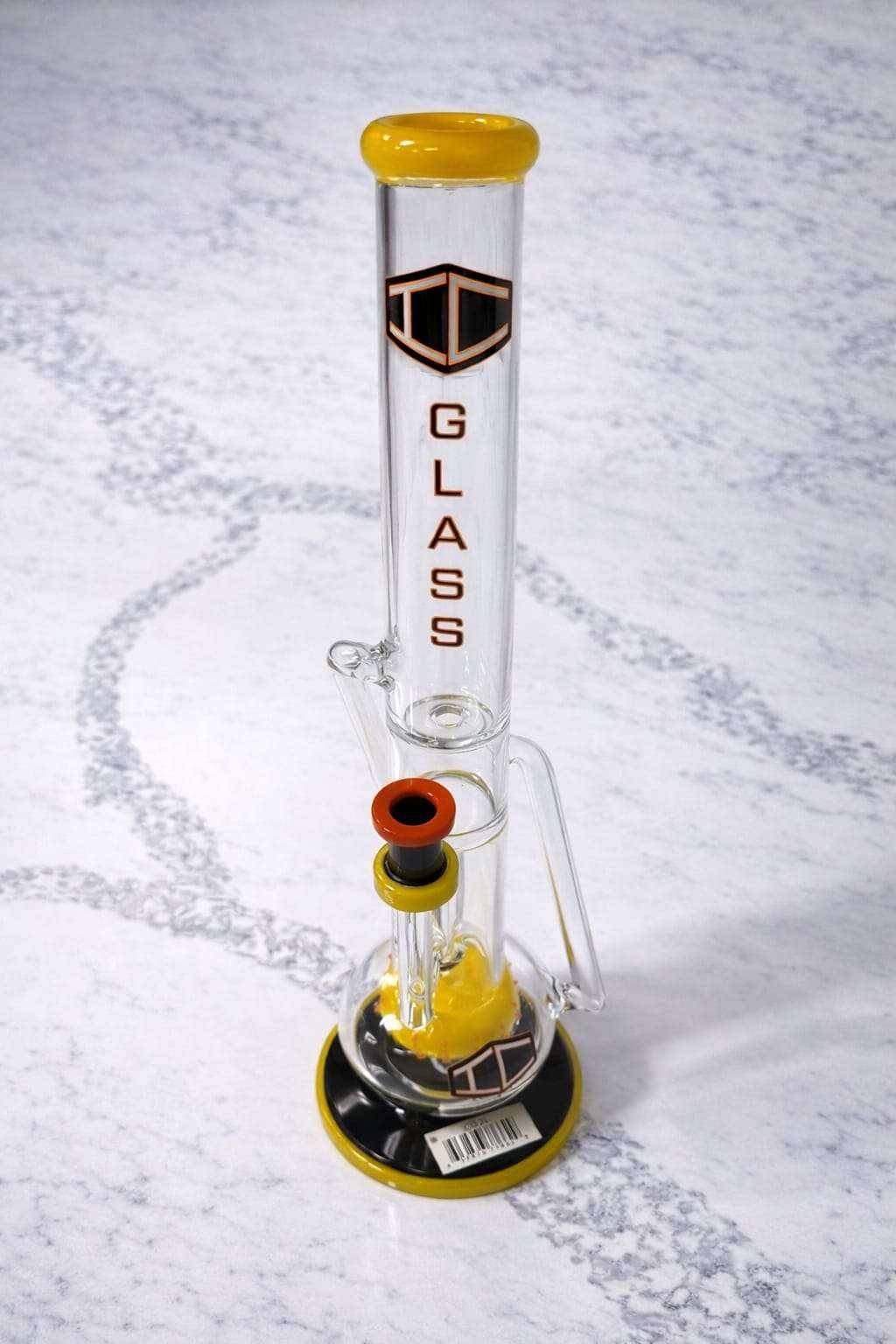
Borosilicate handles heat changes better than soda-lime soft glass. Learn what wall thickness in mm means and how to judge build quality at the counter.
Borosilicate is a hard glass made with boron that expands very little when heated, so it copes with temperature changes far better than ordinary glass. Soft glass is soda-lime glass, the family that bottles and window panes belong to. It costs less and takes bright color well, but it is more likely to crack when it heats or cools quickly.
What borosilicate glass is
Borosilicate is mostly silica with boron oxide added. The boron changes how the glass reacts to heat: for the same rise in temperature, it expands roughly a third as much as soda-lime glass. Less expansion means less stress when one part of a piece is hotter than another, such as a bowl sitting next to a flame. Laboratory glassware is made from it for that reason, and so are most scientific-style water pipes.
It also melts at a higher temperature and is harder to work, which is part of why it costs more.
What soft glass is
Soda-lime glass is made with soda and lime in place of boron. It melts at a lower temperature, so glassblowers call it soft glass. In pipes it shows up in two places: low-cost pieces, and some decorative art glass, where it gives dense, vivid color.
Soft glass expands more with heat, so thermal shock is a bigger risk. Treat it gently around hot water and flame. It is also a little heavier for the same size.
Borosilicate's advantage is heat, not drops. Either kind breaks on a tile floor.
Wall thickness in millimeters
Wall thickness is the thickness of the main tube, measured in millimeters. Most water pipes fall between 3 and 9 mm.
- 3 to 4 mm: light and less expensive. Fine for careful use at home, less forgiving of knocks.
- 5 mm: the common everyday thickness, a good balance of weight and strength.
- 7 to 9 mm: heavy and solid in the hand, and priced to match.
Why thicker glass is not automatically better
- Weight. A 9 mm tube full of water is heavy to lift and awkward to hold in one hand.
- The weak points stay weak. Joints, welds, downstems and percolators are thinner than the wall, and that is where most breaks start.
- Thermal shock still applies. The inside and outside of a thick wall change temperature at different speeds, which creates stress. Thick glass needs the same care with hot and cold water as thin glass.
- Annealing matters more. After shaping, glass is cooled slowly in a kiln to release internal stress. A well-annealed 5 mm piece will outlast a poorly annealed 9 mm one. You cannot see annealing with the naked eye, which is why the visible build clues below matter.
How to judge build quality at the counter
Ask before you handle a piece, then check these points.
- Welds. Look where the base meets the tube and where the joint meets the body. A good weld is smooth, even and fully blended. Sharp creases, pinholes, trapped bubbles and thin-looking spots are warning signs.
- Joint. The frosting should be even all the way around, and a bowl or downstem should seat without rocking. See glass joint sizes explained for what a correct fit looks like.
- Base. Set the piece on a flat counter. It should not wobble, and the foot should be clearly wider than the tube. Beaker vs straight tube compares the two base styles.
- Even walls. Look at the mouthpiece rim. The glass should be the same thickness all around, with a rounded, comfortable edge.
- Clarity. Hold it to the light. A stray tiny bubble is cosmetic. Lines, cloudy streaks or a cluster of bubbles at a weld are not.
- Alignment. The downstem and any percolator should sit straight and centered.
Can you tell borosilicate from soft glass by looking?
Not reliably. Clear borosilicate and clear soda-lime look alike, and thickness tells you nothing about the type. Ask what the piece is made of and how thick the wall is. If nobody can say, assume soft glass and be extra careful with temperature changes.
Compare glass in person
Weight and balance are hard to judge from a photo. The glass collection shows the shapes on the shop floor, and how to store and transport glass covers keeping a new piece in one piece.
Utopia Smoke Shop is at 7625 Firestone Blvd, Downey, CA 90241, open every day from 7 AM to 2 AM. Call (562) 390-0580 with questions about a specific piece. Adults 21 and over only.
Keep reading.
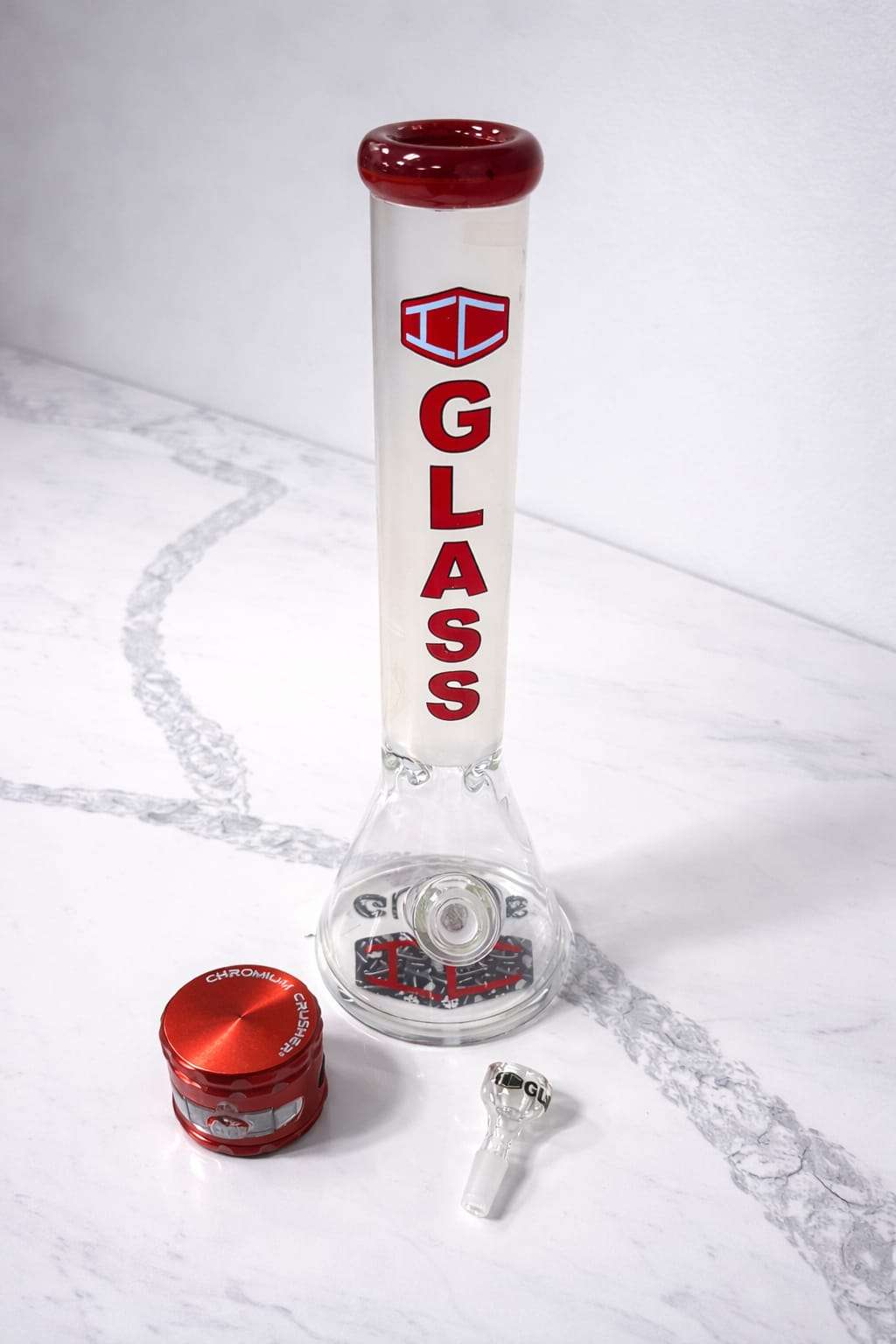
Glass care4 min read
Beaker vs straight tube: how to choose a water pipe shape
Beaker or straight tube? Compare base stability, water volume, how each shape clears, cleaning, storage, glass thickness and joint sizes.
Glass care4 min read
How to store and transport glass without breaking it
Pack and store glass so it survives: empty the water, remove the bowl and downstem, use a padded hard-shell case and keep it off counter edges.
Glass care4 min read